178 Furnished and unfurnished short-term rentals in Washington DC: Browse and book your perfect room or apartment today
Secure your perfect rental in the best neighborhoods, with flexible monthly leases and temporary housing options. Apply now and move in tomorrow!
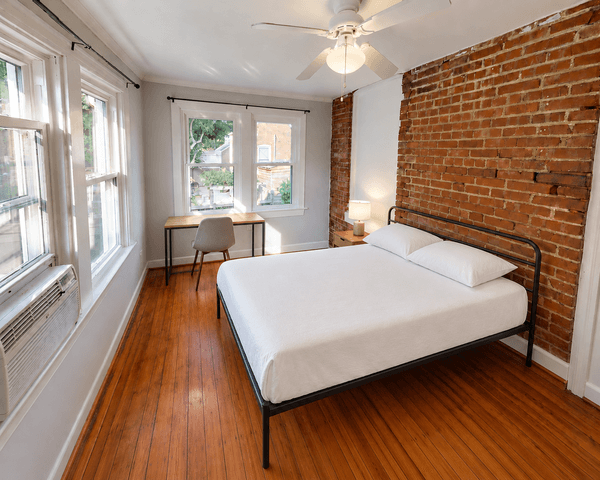
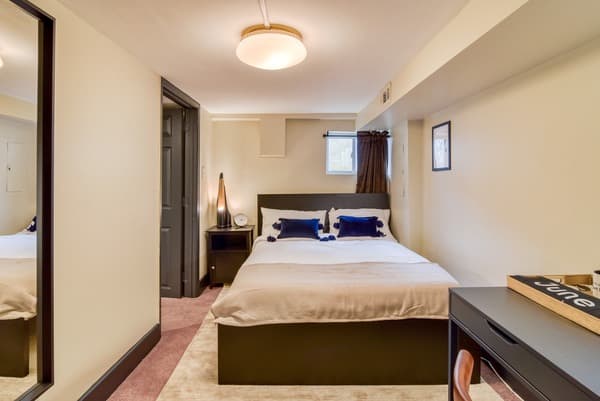
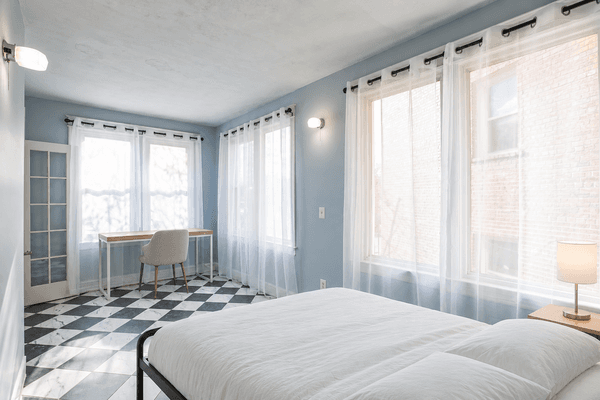
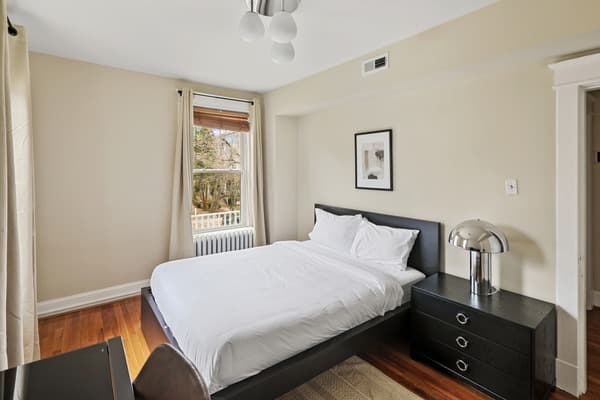
Want to book faster?
Get pre-approved in less than 2 hours
and move-in as early as tomorrow
Application fee credited to your first month's rent when you move in.
All you need is your ID and SSN, nothing else
Frequently Asked Questions
- What is a furnished flexible rental in DC?
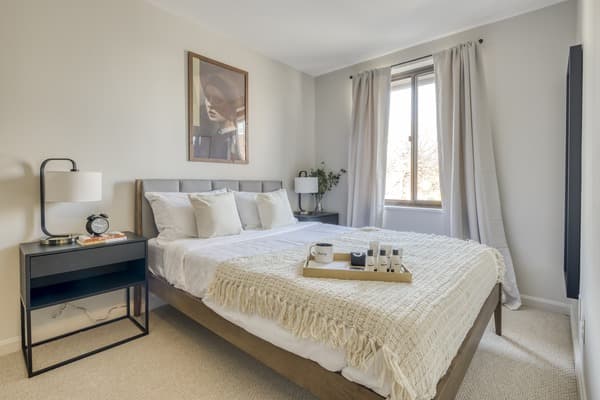
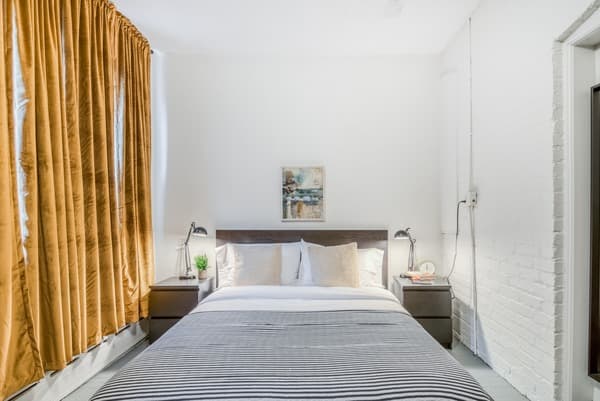
A furnished flexible rental is a fully-equipped apartment or private room available on leases starting at one month, versus a standard 12-month unfurnished lease. Shared-apartment common spaces come furnished by default; studios and one-bedrooms let the tenant choose furnished or unfurnished. This kind of rental is also commonly searched for as a short-term rental, a month-to-month lease, or temporary housing in DC — different phrasings for the same flexible, furnished model.
- Is this the same as subletting in DC?
Not quite. A sublet usually means an existing tenant temporarily hands off their own apartment to someone else. With June Homes, you sign a lease directly, so there’s no original tenant in the background and no risk of an unauthorized sublet violating someone else’s lease.
- What’s the difference between a short-term rental and a long-term rental in DC?
June Homes offers lease terms from 1 month up to 12 months, and choosing a longer stay doesn’t mean more paperwork or a broker-style process — every lease length goes through the exact same simple digital application. A shorter, flexible lease suits work assignments, fellowships, or relocations; a 12-month lease works more like a traditional DC rental, with the option to go unfurnished.
- Is it legal to rent a furnished apartment in DC for less than a year?
Yes. Washington DC’s Short-Term Rental Regulation Act of 2018 (D.C. Law 22-307; D.C. Official Code § 30-201.01 et seq.), administered by the Department of Licensing and Consumer Protection (DLCP), regulates short-term and vacation rentals hosted by a natural person operating out of their own primary residence — a license-holder must be an individual, not a company, and the property must be their homestead.
June Homes’ leases don’t fit that category at all: units are leased directly by a company, not sublet from an individual host’s own home, and stays run 30+ days as ordinary long-term tenancies either way. This is a summary of the public rule, not legal advice.
- Do I have to pay a broker fee to rent with June Homes?
No, June Homes doesn’t charge tenants a broker fee in DC.
- How do I qualify as a resident?
Proof that your monthly income is at least 3x the monthly rent, or cash assets equal to 36x the monthly fee (provable via bank statements). DC is the one market where June Homes doesn’t apply a minimum credit-score requirement to the primary applicant — a genuine differentiator for renters without U.S. credit history. If you’re qualifying through savings rather than income, see our guide to renting with no income but savings.
- What documents do I need to rent in DC?
You’ll need a valid ID or passport and proof of income or savings; a guarantor if your income is low or you’re international.
- What if I don’t qualify as a resident on my own?
Apply with a guarantor who co-signs your lease, or enroll with June Homes’ partner, TheGuarantors, who can act as your guarantor for a fee if you can’t find your own.
- What is a guarantor, and what do they need?
A guarantor, usually a parent or guardian, co-signs your lease and commits to covering rent if you can’t. Even though DC doesn’t require a credit score from the primary applicant, a guarantor in DC does need one: at least 650, plus monthly income at least 5x the monthly fee or cash assets equal to 50x the monthly fee.
- Are requirements different for international applicants?
Yes. International applicants (or their guarantor) provide proof of financial status instead of U.S. credit history — bank statements or proof of funds from their home country. June Homes also supports international applicants with virtual tours, so you can view a home and apply before you’ve relocated.
- How much is a security deposit, and how soon do I get it back?
One month’s rent, refundable within 14 days of move-out following a successful inspection.
- How fast can I get approved and move in?
Pre-approval typically takes less than 2 hours, and you can move in as early as the next day. All you need to apply is your ID and SSN.
- Is there an application fee?
Yes, but it’s credited toward your first month’s rent once you move in.
- Are utilities included in my rent?
No, utilities are billed separately based on each unit’s actual consumption.
- Are there any hidden fees I should know about?
No, every fee applies as communicated during your application, with the sole exception of utility bills, which vary by usage.
- What upfront costs should I expect?
Your first full month of rent, one month’s rent as a security deposit, and applicable fees — all due within 3 days of signing. The next bill is prorated to the calendar month, then billing continues monthly.
Beyond what June Homes charges, it’s worth budgeting for moving costs that apply no matter who you rent from: movers, transportation around the city, and, if you choose an unfurnished unit, furniture for your own space.
- Is renting furnished actually cheaper than renting unfurnished and buying your own furniture?
It depends on how long you’re staying. For a stay under a year, furnished almost always works out cheaper once you factor in furniture, delivery, and moving it when you leave.
- Is it more affordable to live with a roommate in DC?
Yes. Roommates help cut down the high cost of living by sharing rent and utilities, DC is consistently ranked among the more expensive U.S. rental markets, so splitting costs makes a real difference. Our guide to splitting rent fairly breaks down a few different ways to divide costs with a roommate.
- Are there discounts for longer leases or upfront payments?
We run promos from time to time, so keep an eye on your email, or reach out to our Sales team to ask about any current offers.
- How flexible are rental durations in DC?
June Homes offers flexible leases, including 1-month, 3-month, 6-month, and 12-month options, ideal for work assignments, fellowships, or longer-term housing, whether you’re a student, a professional, or on a government or congressional posting.
- What’s the minimum lease duration?
All units are available for any stay from 1 to 18 months, and you can always extend further if needed. The minimum lease duration in days is between 30 and 32.
- What if I’m not sure how long I’m staying?
That’s fine, you don’t have to commit to an exact length upfront. Choose the lease term that fits what you know now; June Homes notifies you in writing before your lease ends about renewal options, and extending is possible depending on availability, though it’s not guaranteed.
- Can I book an apartment instantly after applying?
Yes, once approved, you can book instantly. It’s first-come, first-served, so submit everything quickly if you want a specific unit.
- Are virtual tours available? What about in-person tours?
Yes, view listings via virtual tour on the site, or schedule a guided tour with an agent (up to 2 properties). In-person tours are available after application approval.
- Can I book multiple rooms or the entire unit for a group?
Absolutely. Depending on availability, you can book several rooms or even the entire unit for shared living or group housing.
- Can I move in early or late?
Early move-in depends on your scheduled date, the current tenant’s move-out, and cleaning time, if possible, for a $50 fee. After your move-in date, you can arrive anytime.
- What are the cheapest neighborhoods for flexible rentals in DC?
Among June Homes’ DC neighborhoods, a few consistently come in more affordable than the city’s priciest core:
- Brookland: in Northeast near Catholic University, on the Red Line, and one of the better-value options in the city.
- Petworth: Northwest DC on the Green/Yellow Line, historically more affordable than neighborhoods like Dupont Circle or Capitol Hill.
- Edgewood: just next to Brookland, residential and similarly budget-friendly.
- Upper Central NE: another Northeast option worth checking for value relative to central DC.
- What neighborhoods are safest in DC for renters?
Rather than characterize specific DC neighborhoods here without solid, current crime data — same reasoning as before — see our researched guide to the safest neighborhoods in Washington DC for a proper breakdown.
- What are the most popular neighborhoods for flexible rentals in DC?
- Dupont Circle: DC’s classic embassy-row and nightlife hub, walkable and well-connected, though one of the pricier options.
- Capitol Hill: historic, near Congress, popular with government and policy professionals.
- Columbia Heights: diverse and lively, well-connected via the Green/Yellow Line.
- Cleveland Park and Woodley Park: quieter, residential, near the National Zoo and Metro.
- Is temporary housing available in DC with June Homes?
Yes, a flexible, furnished June Homes lease works as temporary housing in DC for anyone who doesn’t need a 12-month commitment: relocating professionals, fellows, interns, or anyone bridging a gap between homes.
- Is it safe to live with roommates I don’t know, and how does June Homes vet them?
Every U.S.-based resident goes through background and credit checks before moving in, and June Homes speaks with touring residents beforehand, though that verifies who someone is, not whether you’ll get along, so screening can’t guarantee compatibility. Roommates are usually professionals or students; per fair housing law, June Homes can’t filter by age or gender.
- Are the apartments furnished?
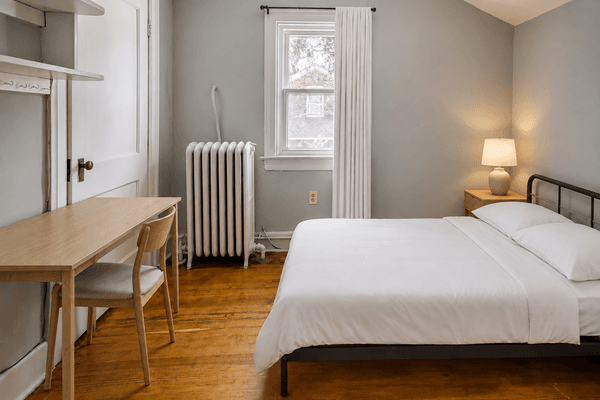
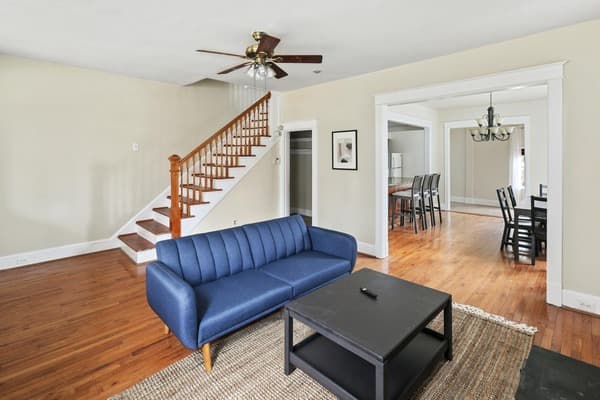
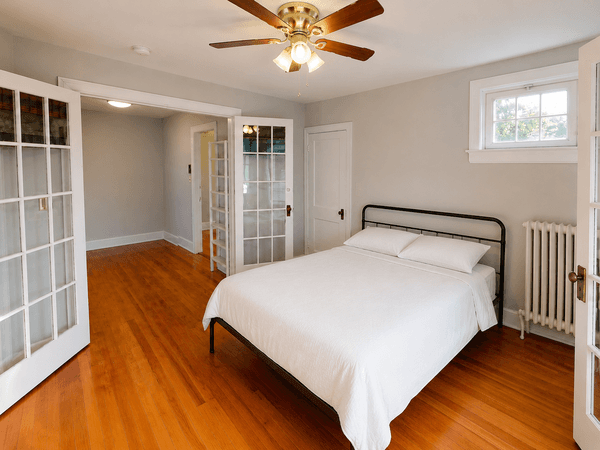
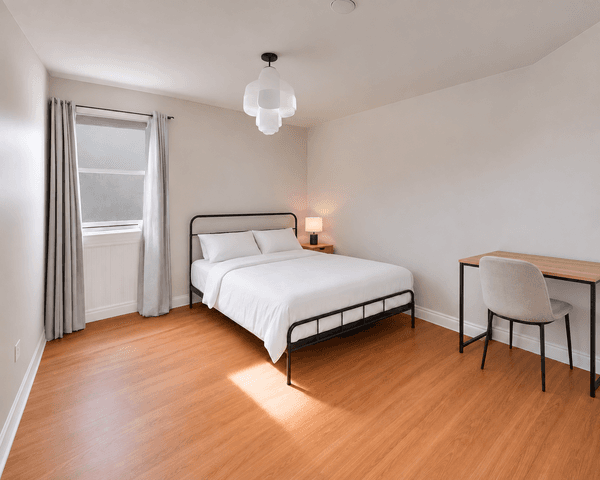
Shared spaces within shared homes always come furnished; you choose the furnishing status of your own room. For a studio or 1-bedroom, you choose the furnishing status of the entire space.
- Do apartments come with air conditioning, heating, an elevator, or in-unit laundry?
Some properties do while others don’t. The best way to find out about a specific home is to read the home description, or reach out to our team for any specific requests.
- Are pets allowed, and are there any breed or size restrictions?
Yes, pets are allowed in designated pet-friendly units, with a limit of one pet per unit. There are no breed or size restrictions, but we follow all applicable local laws. ESAs and service animals are welcome in all units.
- Do I need renter’s insurance?
Whether coverage is required, a suggestion, or building-specific is an open internal question. But where it applies, a renter’s protection plan is your resource for filing a claim if your belongings are damaged or lost, and depending on the insurance package, you may also be eligible for temporary housing if your home becomes uninhabitable for a period of time. Reach out to TheGuarantors’ insurance team directly, they can help answer any questions and find the right plan for you.
- What is the average rent for a 1-bedroom apartment in Washington DC, DC?The average rent for a 1-bedroom apartment in Washington DC starts at $1950 per month. As of October 05, 2026 there are 6 1-bedroom apartments available for rent in Washington DC, DC
- What is the average rent for a room in Washington DC, DC?The average rent for a room in Washington DC starts at $1175 per month. As of October 05, 2026 there are 177 rooms available for rent in Washington DC, DC
Who Rents Flexible Furnished Housing in DC?
- Students: Georgetown, GW, Howard, American, Catholic University, Gallaudet, Trinity Washington, and others — see Student Housing DC.
- Travel nurses / healthcare workers: MedStar Washington Hospital Center, GW University Hospital, Children’s National, MedStar Georgetown University Hospital, Howard University Hospital, Sibley Memorial, and others — see Travel Nurse Housing DC.
- Corporate and government relocations: DC’s federal, policy, and consulting job market draws professionals relocating on short notice.
- Young professionals: DC’s tech, policy, and consulting job market draws renters who want flexibility while they get oriented to a neighborhood — see our guide to DC neighborhoods for young professionals.
- Seasonal interns and fellows: DC’s internship, fellowship, and congressional-staff cycles create genuine seasonal demand — a 1–3 month flexible lease timed to a summer internship or fellowship, without the commitment a full lease would require.
More ways to find your place
Neighborhoods
Apartments and Rooms for Rent
Rent Nearby Washington, DC Universities
Rent Nearby Washington, DC Hospitals
- MedStar Washington Hospital Center
- George Washington University Hospital
- Children's National Medical Center
- MedStar Georgetown University Hospital
- Howard University Hospital
- Sibley Memorial Hospital
- Washington D.C. VA Medical Center
- MedStar National Rehabilitation Hospital
- Psychiatric Institute of Washington
- St. Elizabeths Hospital
- BridgePoint Hospital Capitol Hill
- The HSC Pediatric Center
- Children's National Emergency Department
- BridgePoint Continuing Care Hospital National Harborside